
Discover what DevOps is, its key components and benefits, and how businesses can improve software delivery, strengthen security, automate workflows and build scalable digital infrastructure.
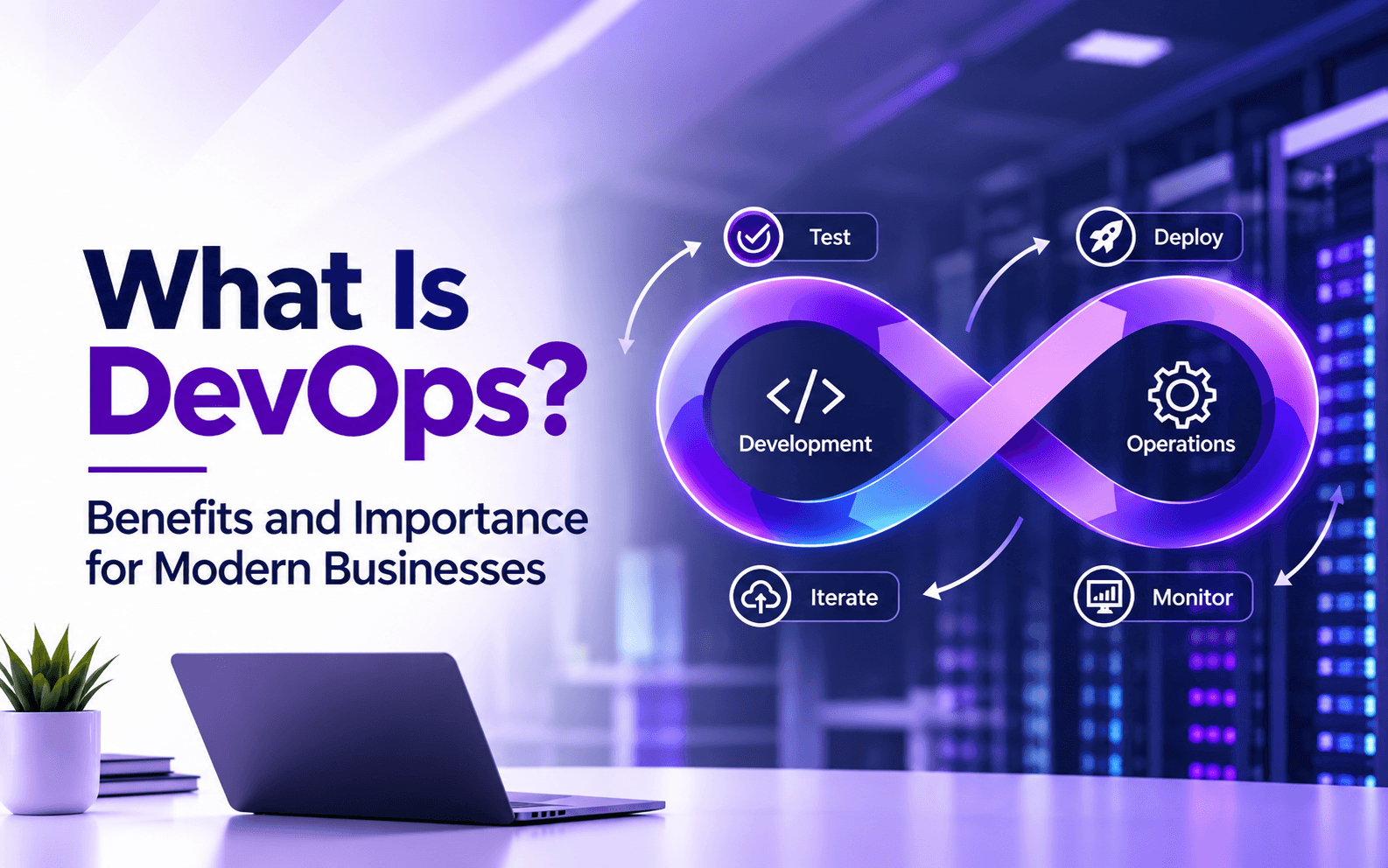
DevOps is a combination of development (Dev) and operations (Ops) practices that helps businesses build, test, deploy and maintain software more efficiently.
It brings development and IT operations together through automation, continuous integration, continuous delivery and infrastructure management.
For businesses investing in digital transformation, DevOps is more than a technical approach. It creates a structured way to release software faster, reduce deployment risks and maintain reliable digital systems.
As applications become more complex and customer expectations continue to increase, having an efficient development and deployment process is essential.
Why Are Businesses Adopting DevOps?
Traditional software development often involves separate development and operations teams. This can create communication gaps, delayed releases and difficulties when moving applications from development to production.
DevOps addresses these challenges by creating a more connected development environment.
Here are five important benefits:
1. Faster Software Delivery
DevOps introduces automated workflows that reduce repetitive manual tasks. Development teams can test, integrate and release new features more frequently.
2. Improved Software Quality
Continuous testing helps identify errors earlier in the development process. This reduces the chances of major issues reaching production environments.
3. Better Collaboration
Development, testing and operations teams work within a shared process, improving communication and accountability.
4. Scalable Infrastructure
Cloud infrastructure and automation allow businesses to adjust resources based on application requirements and changing workloads.
5. Stronger Security Practices
DevSecOps integrates security checks into the development lifecycle, helping teams identify vulnerabilities before deployment.
What Are the Key Components of a DevOps Process?
An effective DevOps environment generally includes several connected practices:
• Continuous Integration (CI): Automatically integrates code changes and runs tests to identify issues early.
• Continuous Delivery (CD): Prepares tested software for reliable release.
• Infrastructure as Code (IaC): Manages infrastructure through configuration files and code.
• Monitoring and Logging: Tracks application performance, system health and potential issues.
• Configuration Management: Maintains consistency across development, testing and production environments.
• DevSecOps: Integrates security into development and deployment workflows.
Together, these practices create a more predictable and efficient software delivery process.
When Does Your Business Need DevOps?
Your business may benefit from DevOps when:
• Software releases frequently take longer than expected.
• Development and operations teams face coordination issues.
• Application downtime affects customers or business operations.
• Infrastructure management requires too much manual effort.
• Your application needs to support increasing users and workloads.
• Security and testing need to become part of the deployment process.
DevOps is particularly valuable for businesses developing enterprise platforms, SaaS products, education technology and applications that require continuous updates.
How Can AVAIBE Help With DevOps Solutions?
At AVAIBE, we approach DevOps as part of the wider software engineering lifecycle.
Our focus is on helping businesses establish reliable development and deployment workflows that support long-term product growth.
Our DevOps capabilities include:
• DevOps consulting and strategy
• CI/CD pipeline development
• Infrastructure automation
• DevSecOps implementation
• Cloud and infrastructure solutions
We work alongside businesses to understand their existing systems, identify operational challenges and develop practical solutions around their technical requirements.
Final Thoughts
Building software is only one part of delivering a successful digital product. Maintaining performance, managing infrastructure, improving security and releasing updates consistently are equally important.
DevOps connects these responsibilities through automation and collaboration.
For businesses planning to scale their digital products, investing in the right DevOps approach can create a stronger foundation for sustainable growth.
Looking to improve your software delivery process?
AVAIBE works alongside your team to build reliable software and infrastructure solutions.
Explore our AI & Automation Services and Cloud & DevOps Solutions.
Have a project in mind? Contact our team or email admin@avaibe.com to discuss your requirements.
Frequently Asked Questions
What is DevOps in simple terms?
DevOps is a software development approach that connects development and IT operations to automate workflows, improve collaboration and deliver software more reliably.
What are the main benefits of DevOps?
The main benefits include faster software releases, improved collaboration, automated testing, better infrastructure management and more reliable deployments.
What is the difference between DevOps and DevSecOps?
DevOps focuses on integrating development and operations. DevSecOps extends this approach by embedding security practices throughout the software development lifecycle.
Is DevOps suitable for small businesses?
Yes. Small businesses can use DevOps practices to automate repetitive tasks, improve deployment processes and build infrastructure that can grow with their applications.
Does DevOps require cloud infrastructure?
No. DevOps can be implemented using cloud, on-premises or hybrid infrastructure, depending on the organisation's technical requirements.